
Who's the Best for Vendor-Neutral Archives: Sectra vs Medicai
Many radiology teams now face a choice between Sectra and Medicai when replacing aging archive systems that no longer support cloud access or API-driven workflows. The decision comes down to which vendor-neutral archive can store, retrieve, and share DICOM studies across multiple sites without forcing new hardware purchases.
By the end of this article you will see a side-by-side list of cloud architecture, integration options, and compliance features, plus clear guidance on which platform fits small imaging centers and which suits large health systems, ending with a direct recommendation.
Quick Verdict: Medicai vs Sectra for Vendor-Neutral Archives
Medicai delivers a cloud-native VNA with 1M+ studies processed yearly and zero-footprint DICOM viewing, while Sectra offers a mature on-premise/cloud hybrid solution primarily adopted by large health systems.
Medicai runs on a subscription model that scales with usage and has cleared 50M+ API transactions in a single year. Sectra relies on traditional enterprise licensing and maintains a stronger emphasis on on-premise deployments.
Both platforms meet HIPAA and GDPR compliance, yet Medicai's cloud architecture and Azure partnership support faster rollout across distributed sites. Sectra's track record within large health systems still appeals when institutions require extensive on-premise control.
Research suggests smaller and mid-sized imaging centers often prioritize rapid deployment and predictable monthly costs over legacy licensing structures. Medicai's 70 clinics and hospitals already report shorter diagnosis times after switching to its subscription VNA.
At a glance: how Medicai compares to Sectra on the features that matter most.
| Feature | Medicai | Sectra |
|---|---|---|
| Vendor-Neutral Archives | ✓ | ✓ |
What Is Medicai?
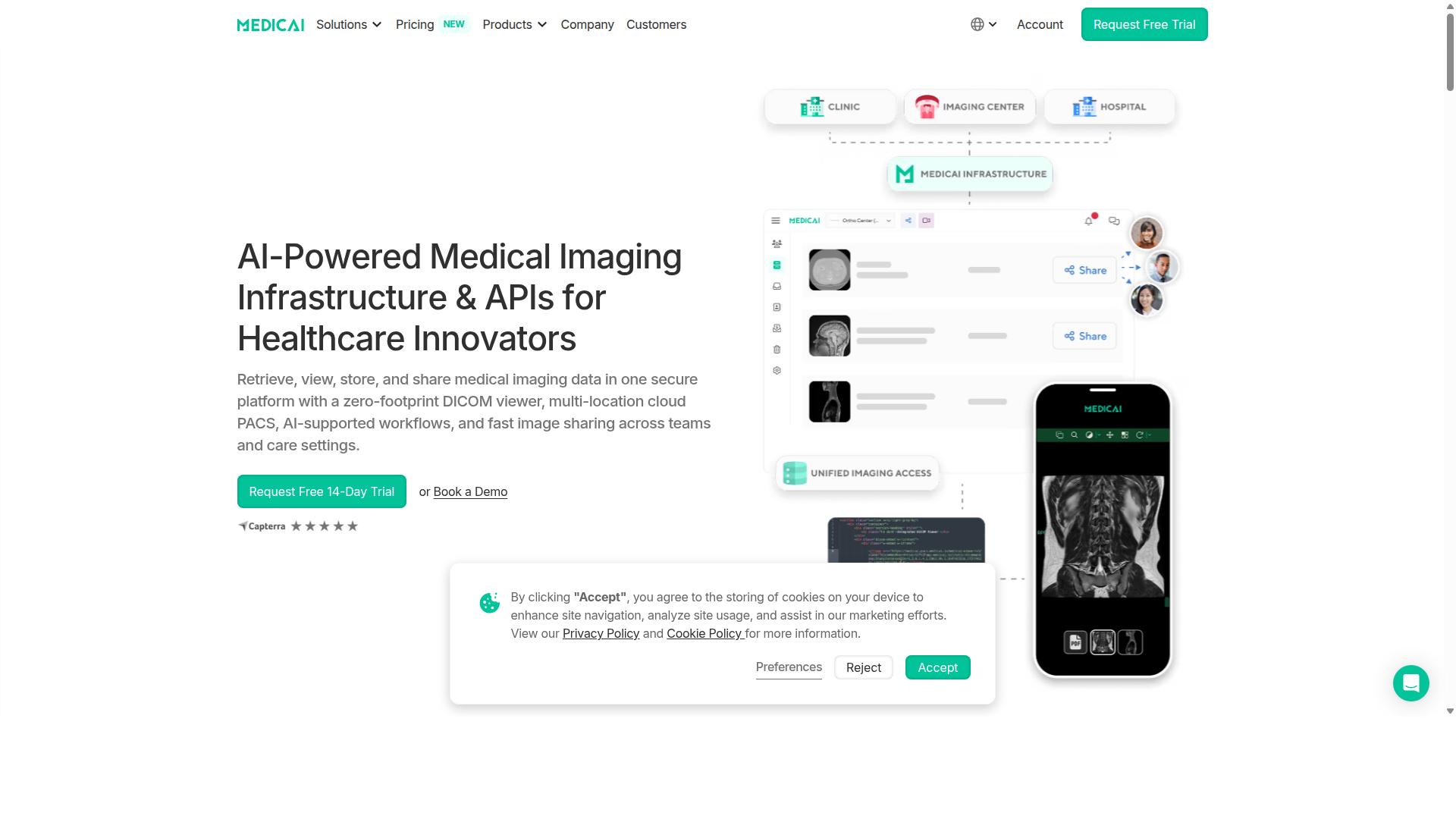
Medicai is a cloud-based medical imaging platform that lets providers upload, view, store and share DICOM studies through a zero-footprint viewer. This architecture removes the need for local installations while keeping imaging data accessible across care settings.
Core design centers on Imaging Infrastructure as a Service. Providers can retrieve, view, store and share medical imaging data in one secure platform that combines a zero-footprint DICOM viewer, multi-location cloud PACS and AI-supported workflows.
The platform supports standards that matter for vendor-neutral archives. It works with HL7 and FHIR, which helps teams maintain interoperability when connecting different hospital systems and imaging vendors.
Security and regulatory clearances are built in. HIPAA and GDPR compliance protect patient data, while FDA and CEE clearances confirm adherence to medical device regulations for diagnostic imaging.
Scale is visible in the numbers. The platform currently holds 1.7M studies in storage and supports more than 300k yearly visualizations, showing capacity for enterprise imaging environments that need long-term storage and consistent retrieval.
What Is Sectra?
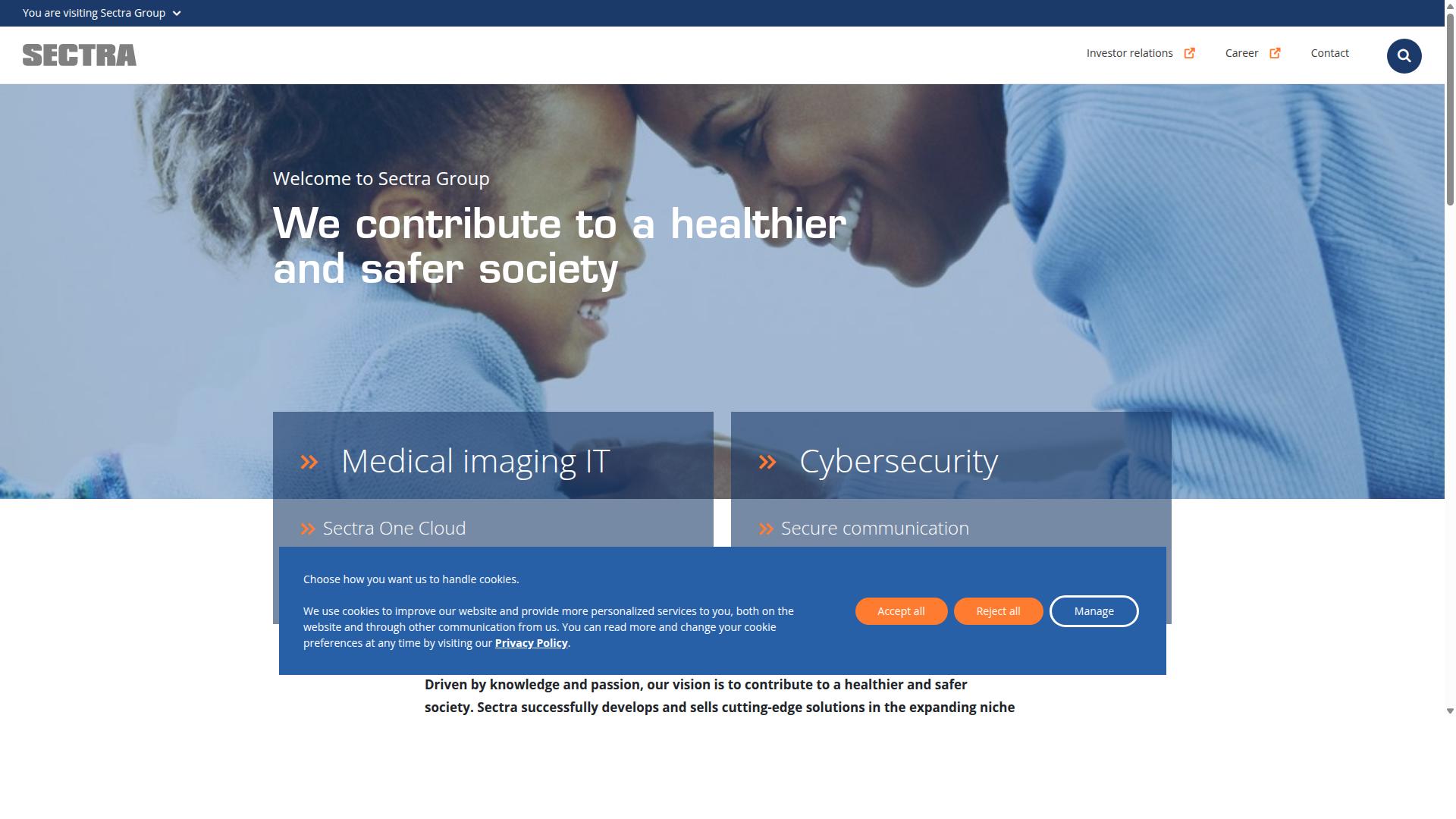
Sectra provides a vendor-neutral archive and radiology imaging solution that many large hospital systems deploy either on-premise or in private-cloud configurations.
The company has built a substantial enterprise imaging footprint over several decades. Its solutions focus on managing medical imaging data across multiple departments and facilities.
Sectra emphasizes archive consolidation for healthcare organizations that operate several imaging systems. The platform supports DICOM standards and works with various PACS environments already in use.
Implementation typically requires significant upfront planning. Organizations often need dedicated IT resources and extended timelines to complete full deployments across their networks.
Many large health systems choose Sectra when they require highly customized on-premise infrastructure. The solution serves facilities that prioritize full control over their data storage environment.
Support and maintenance follow traditional enterprise software models. Healthcare IT teams usually manage ongoing updates and system monitoring as part of their internal operations.
Features Compared
Three feature areas differentiate the VNAs: architecture, integration breadth and security posture. Each category affects how healthcare organizations store, move and protect medical imaging data across multiple departments and vendors.
Organizations evaluating vendor-neutral archive solutions need platforms that handle growing study volumes while maintaining connections to existing systems. The following sections examine how each platform approaches these requirements.
Cloud-Native VNA Architecture
Medicai's zero-footprint viewer runs entirely in the browser and stores studies across multi-region AWS and Azure infrastructure. This approach eliminates local server maintenance while delivering consistent access from any location.
Organizations gain access to 99.9% uptime SLA through the distributed infrastructure. The platform maintains 24-hour backup and disaster recovery capabilities across the multi-region setup.
Sectra's architecture typically combines on-premise components with optional cloud elements. Healthcare IT teams often need to manage hardware refresh cycles and local infrastructure requirements when deploying this type of hybrid model.
Scalability requirements vary by organization size. Cloud-native designs allow automatic resource adjustment during peak periods without manual intervention from technical staff.
Integration & API Capabilities
Medicai exposes more than 50 million yearly API calls, allowing direct HL7/FHIR links to EHRs and third-party AI tools. The platform connects with MD.ai, OHIF, MedDream and Microsoft Azure services.
Interoperability becomes essential when radiology departments work with multiple imaging vendors and AI analysis tools. FHIR connections enable structured data exchange between the vendor-neutral archive and electronic health record systems.
Sectra offers integration capabilities through established healthcare IT partnerships. Implementation timelines often depend on the complexity of existing systems and the scope of required connections.
API transaction volumes indicate platform maturity in handling real-time data requests from multiple clinical applications simultaneously.
Security & Compliance Standards
Both platforms prioritize encryption and access controls, yet Medicai's explicit HIPAA, GDPR and FDA/CEE clearances provide immediate verification for multi-national deployments. The platform follows OWASP security guidelines for application development practices.
Compliance documentation becomes critical when healthcare organizations operate across different regulatory jurisdictions. Pre-cleared systems reduce the validation burden for IT and legal teams during procurement processes.
Sectra maintains security measures appropriate for healthcare environments. Organizations typically conduct their own compliance reviews based on specific regional requirements and institutional policies.
Data integrity standards affect long-term storage decisions for medical imaging archives. Regulatory clearances provide documented evidence of security testing and validation processes.
Pricing Compared
Medicai publishes transparent monthly subscriptions while Sectra's pricing is handled through custom enterprise quotes. This difference in approach creates distinct paths for organizations evaluating vendor-neutral archive solutions.
Medicai offers two fixed tiers with clear storage allocations and unlimited user accounts. The Starter plan costs $249 per month and includes 500 GB of cloud storage without any connected locations.
The Standard tier increases capacity to 2 TB for $749 per month with one connected location. Both tiers maintain unlimited user accounts, allowing entire radiology teams to access the same vendor-neutral archive without additional licensing fees.
Sectra typically requires organizations to request custom enterprise quotes. Pricing for Sectra's vendor-neutral archive solutions varies based on deployment scope, storage requirements, and integration complexity.
Yearly billing reduces Medicai costs by 15 percent. The Starter plan drops to $209 monthly and the Standard plan falls to $639 monthly when paid annually.
A one-time DICOM Gateway setup fee of $1,000 applies per location. Medicai also offers per-study pricing options for enterprise customers who prefer usage-based billing over subscription models.
Organizations comparing these vendor-neutral archive platforms should evaluate their storage needs against published rates. Medicai's transparent structure allows direct budget planning without lengthy procurement cycles.
Who Should Choose Medicai
Hospitals, imaging centers and specialty practices seeking a scalable, subscription-based VNA with rapid API integration choose Medicai.
Mid-size radiology groups process high volumes of studies daily. The platform handles over one million studies yearly, making it suitable for busy departments that need reliable capacity without upfront hardware investment.
Cardiology practices require fast access to prior imaging across multiple modalities. Medicai's subscription model eliminates capital expenditure while providing the interoperability needed for PACS replacement or consolidation projects.
Oncology centers coordinate care across tumor boards and clinical trials. The Starter and Standard tiers offer flexibility for groups that want enterprise imaging capabilities without complex licensing structures.
Healthcare providers value predictable costs and quick deployment timelines. Medicai's cloud infrastructure supports DICOM workflows and API connections that connect with existing healthcare IT systems.
Who Should Choose Sectra
Large academic medical centers and multi-hospital systems that prefer on-premise or private-cloud deployments often select Sectra. These organizations typically maintain extensive imaging networks that require tight control over hardware and infrastructure.
The platform appeals to institutions that have established IT teams ready to manage server maintenance. They also value vendor relationships that span many years of service contracts.
Academic research centers benefit from the detailed study tools built into the system. Residents and fellows can access teaching files and case libraries directly within the archive environment.
Health systems with multiple radiology groups appreciate the enterprise imaging capabilities. They can consolidate studies from different PACS vendors into one long-term storage repository.
Organizations handling sensitive research data often select Sectra when compliance requirements demand on-premise control. Government-funded facilities sometimes prefer this model for data sovereignty reasons.
Established hospital networks that already use Sectra for radiology reporting find value in extending that relationship to archive services. The unified vendor approach simplifies contract management and support escalation.
Regional health systems planning gradual infrastructure changes may choose Sectra. They can deploy the system incrementally across facilities while maintaining existing workflows.
Final Verdict
Medicai's cloud-native VNA, transparent pricing and 50 million API transactions make it the faster deployment choice for growing providers, whereas Sectra remains entrenched in large-scale enterprise environments.
Yearly volumes handled by Medicai reflect consistent reliability across multiple healthcare facilities. These volumes support organizations that require scalable vendor-neutral archive solutions without heavy infrastructure investments.
Compliance clearances add another layer of assurance. Medicai meets established regulatory standards for data protection and interoperability across different healthcare systems.
Providers evaluating medical imaging platforms often face trade-offs between legacy enterprise systems and modern cloud approaches. Medicai addresses this gap with straightforward deployment timelines and predictable costs.
Sectra continues to serve institutions that need highly customized, on-premise configurations. However, these setups typically require longer implementation periods and more complex licensing structures.
Healthcare organizations prioritizing rapid rollout and ongoing compliance may find Medicai aligns more closely with current operational needs. The platform handles DICOM workflows while maintaining flexibility for future growth.
Medicai USA
7901 4th St N, STE 300
St. Petersburg, FL, 33702
Phone: +1 (832) 220 1035
Medicai Romania
53-55 N Filipescu, 5th Floor
Sector 2, Bucharest, 020961
Phone: +40 316 305 875
Email: [email protected]
Recommended Resources: