
How Much Does a Cedar Wood Sauna for Home Cost in 2026
A cedar sauna for your home in 2026 can run from a few thousand dollars to well over ten thousand, depending on size, cedar grade, and heater type. That spread matters, because two saunas at the same price can differ entirely in materials and build quality. Knowing which features drive cost keeps you from overpaying for the wrong spec.
By the end of this article, you will understand what a custom cedar infrared sauna costs in 2026 and what drives that price. You will also see exactly what SaunaCloud includes in its pricing, from VantaWave® heaters to 3D renderings and installation support, so you can judge whether a cedar sauna is worth the investment for your home.
What Is SaunaCloud? Custom Cedar Saunas Built Since 2014
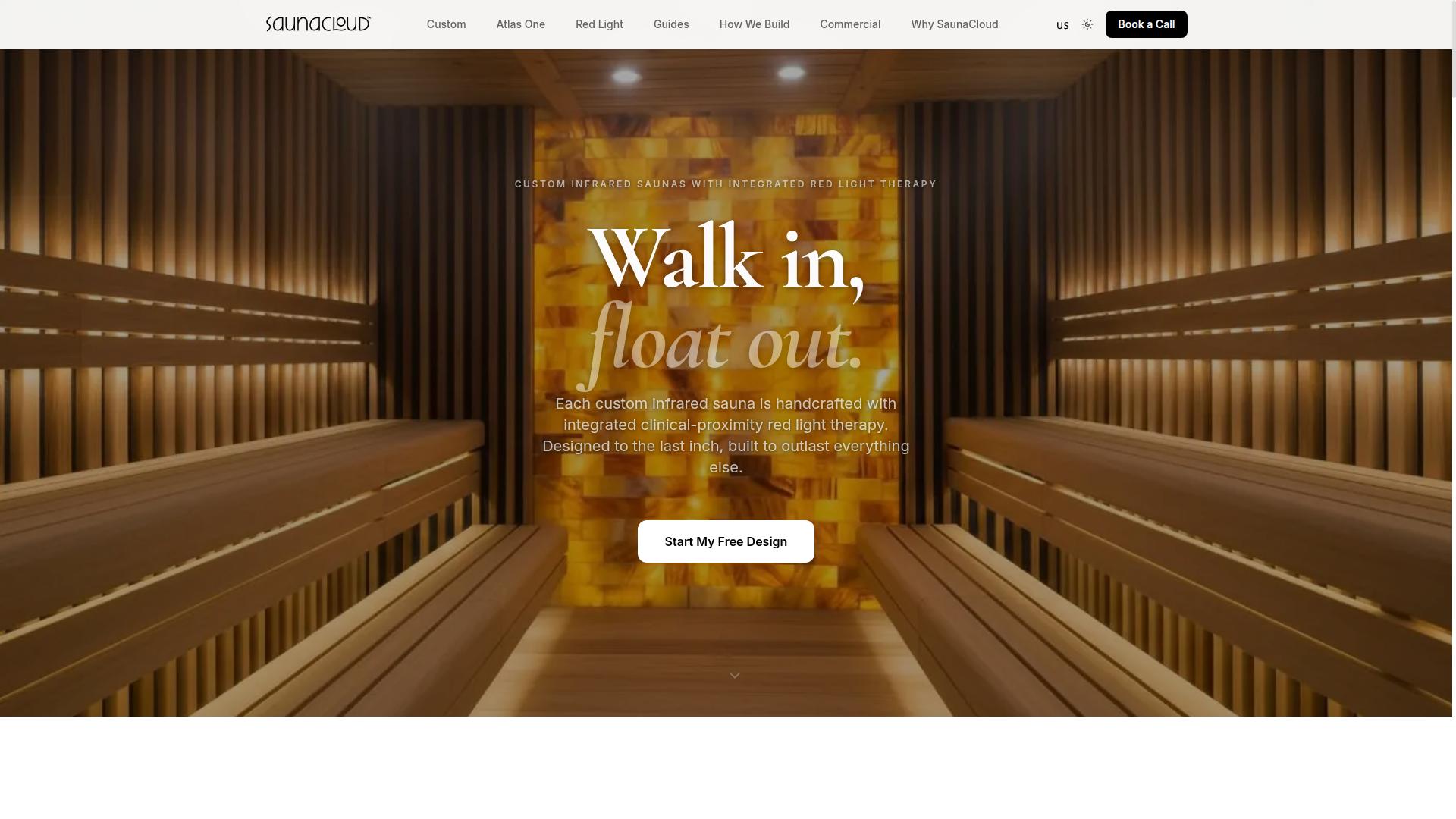
SaunaCloud is a California-based manufacturer that has been handcrafting custom infrared saunas from premium cedar since 2014. The company was founded in Diamond Springs, California, where it still operates today, and it has since expanded to a second facility in Montreal, Quebec.
Unlike brands that assemble imported panels and ship them out under a new label, SaunaCloud designs, engineers, and builds every sauna in-house. That includes VantaWave® heaters, CORE 5™ power supplies, printed circuit boards, Wi-Fi control systems, and red light therapy arrays. This level of vertical integration matters for buyers comparing a home sauna cost in 2026, because it means the components inside the cabin are made by the same company that stands behind the finished unit.
Since 2014, SaunaCloud has completed more than 3,000 installations across North America. That track record spans individual homeowners, clinics, and wellness centers, which tells you the company builds for both residential settings and commercial use.
Cedar sits at the center of everything SaunaCloud makes. Western Red Cedar and Canadian cedar are popular in sauna construction for good reasons. The wood resists moisture, holds up to repeated heat cycles, and carries a natural aroma that many people associate with the sauna experience itself. Cedar also stays relatively cool to the touch compared with some other woods, which matters for bench seating, backrests, and headrests.
The choice between clear grade cedar and knotty cedar affects both appearance and price, and it is one of many decisions that shape a custom build. SaunaCloud's custom approach means a buyer is not locked into a single stock size or layout. The company's focus on infrared saunas with integrated red light therapy also sets it apart from makers of traditional Finnish sauna designs that rely on an electric heater or wood-burning stove.
Who SaunaCloud Serves: Homeowners, Clinics, and Wellness Centers
SaunaCloud's cedar saunas are designed for three primary customer groups: homeowners, clinics, and wellness centers. Each group has different priorities, and a custom build allows the company to match the sauna to the space and the purpose.
Homeowners typically come to SaunaCloud for personal wellness and relaxation. They may want an indoor sauna tucked into a basement or spare room, or an outdoor sauna that fits a backyard or deck. Because every unit is custom, a homeowner can choose the square footage, bench seating layout, sauna door style, and window placement rather than settling for a one-size-fits-all prefab sauna kit. The goals here tend to be everyday use: recovery after exercise, stress reduction, better sleep, and general cardiovascular health.
Clinics need something different. Durability and hygiene move to the front of the list when a sauna sees patient after patient. Materials have to hold up to frequent heat cycles and regular cleaning, and the layout has to support recovery and pain relief protocols. A custom-built sauna lets a clinic specify the interior configuration, ventilation, and floor drain setup that fits its treatment rooms.
Wellness centers often need more than one unit. A facility serving members may require multiple saunas in different sizes and configurations so several people can use them at once or so the center can offer varied sessions. Custom manufacturing makes it possible to order a set of saunas that share a consistent look while fitting different rooms.
Across all three groups, the common thread is the same: buyers are seeking infrared saunas for recovery, pain relief, sleep improvement, stress reduction, and cardiovascular health. SaunaCloud's role is to shape each build around those goals rather than pushing a fixed catalog model. That flexibility, combined with more than a decade of building cedar saunas in North America, is what defines the company for anyone weighing a custom sauna against an off-the-shelf option in 2026.
How Much Does a Cedar Wood Sauna for Home Cost in 2026?
In 2026, a cedar wood sauna for your home typically ranges from $8,000 to $25,000, depending on size, cedar grade, heater type, and additional features. That spread is wide because almost every cedar sauna is built to order, and customization is the single biggest reason two buyers can pay very different amounts for what sounds like the same room.
Unlike a mass-produced prefab sauna with fixed dimensions, a custom cedar build is shaped around your space, your preferred setup, and the extras you want. A compact indoor sauna tucked into a basement corner sits at the low end, while a large outdoor sauna with premium lumber and upgraded controls climbs quickly.
The sections below break the total into its moving parts. First, the four main cost drivers: size, cedar grade, heater type, and features. Then, realistic price ranges for common configurations so you can sanity-check any quote you receive.
What Drives the Price of a Cedar Sauna: Size, Cedar Grade, Heaters, and Features
The price of a cedar sauna is primarily influenced by four factors: size (square footage), cedar grade (clear vs. knotty), heater type (electric vs. wood-burning), and additional features like red light therapy or Wi-Fi controls. Each one compounds the others, which is why estimates swing so widely.
Size matters most. A 2-person sauna needs far less lumber, insulation, and labor than a 5- or 6-person room. Larger footprints also demand more bench seating, more tongue-and-groove paneling, and often a bigger heater to reach temperature. Expect a meaningful jump in cost at every step up in capacity.
Cedar grade splits into two main categories. Clear grade cedar is knot-free and premium, offering a cleaner look and smoother finish. Knotty cedar is more economical and carries a rustic character many homeowners prefer. Western Red Cedar and Canadian cedar are both common choices, and aromatic cedar is sometimes requested, though buyers should research cedar toxicity concerns before selecting an unusual species.
Heater type changes both cost and installation complexity. Electric heaters are easier to install and deliver consistent heat with minimal fuss. Wood-burning stoves offer a traditional Finnish sauna experience but require a chimney, added clearance, and more planning.
Features add up fast. Integrated red light therapy can add roughly $1,000 to $3,000. Wi-Fi controls, ergonomic benches with backrests and headrests, tempered glass doors, windows, ventilation upgrades, floor drains, and duckboards each push the total higher. Accessories like a thermometer, hygrometer, bucket, and ladle are minor line items but worth budgeting for.
Typical Cost Ranges for Custom Cedar Infrared Saunas in 2026
For a custom cedar infrared sauna in 2026, expect to pay between $10,000 and $30,000, with most homeowners spending around $15,000 for a 3-person model with standard features. The table below shows how common configurations compare.
| Configuration | Typical 2026 Price Range |
|---|---|
| 2-person basic model | $8,000 to $12,000 |
| 3-4 person with red light therapy | $15,000 to $22,000 |
| 5-6 person luxury model | $25,000 to $35,000 |
These figures generally include the sauna kit, the heater, and basic installation support. They do not always cover site prep, electrical work, or a dedicated foundation for an outdoor sauna, so ask what a quote includes before comparing two numbers side by side.
Prices also vary by region and dealer. Labor rates, shipping distance, and local demand all play a role, and a coastal market may quote differently than an inland one. A barrel sauna and a custom-built indoor room of the same capacity can land in different spots for the same reason.
Treat every range here as an estimate rather than a promise. Actual quotes may vary based on your space, timeline, and the specific options you choose, so gather more than one quote before committing.
What's Included in a SaunaCloud Cedar Sauna Price
When you purchase a SaunaCloud cedar sauna, your price includes a complete kit with all necessary components, plus design and installation support. This is a turnkey approach: the company has been building saunas since 2014 and has completed more than 3,000 installations, so the package reflects years of refining what a home sauna actually needs.
Every SaunaCloud unit is custom-built rather than pulled off a shelf. That means the price you pay covers a design matched to your space, whether you are planning an indoor sauna, an outdoor sauna, or a commercial installation. A detailed installation plan ships with each order, so you know what goes where before a single panel is unpacked.
It helps to think of the cost in two layers. The first is the hardware: heaters, controls, cedar, and fasteners. The second is the guidance that turns those parts into a working sauna, including drawings, wiring details, and live support during the build. Both layers are baked into the quoted price.
SaunaCloud offers the Atlas and Sierra models, and each one arrives with heaters, control system, power supply, cedar, fasteners, and installation support included. The subsections below break down the technology and the kit contents so you can see exactly where your money goes.
VantaWave® Heaters, Integrated Red Light Therapy, and Wi-Fi Controls
SaunaCloud saunas feature proprietary VantaWave® ultra-low-EMF carbon heaters, integrated 660nm red and 850nm near-infrared LED therapy, and Wi-Fi controls. These are the components that separate a SaunaCloud infrared sauna from a basic budget unit, and they are a large part of why the price sits where it does.
The VantaWave® heaters emit under 3mG EMF, often below 0.5mG, and reach a 190°F surface temperature at a 7.9 microns peak wavelength. For buyers comparing specs, that combination of low EMF and consistent infrared output is the headline number. A sauna heater is the heart of any infrared cabin, and this one is designed and manufactured in-house rather than sourced from a third party.
Red light therapy is built directly into the benches and backrests at 2 to 6 inches from the skin, which the company describes as clinical proximity. Many competing cabins place LEDs farther from the body or omit them entirely, so this positioning matters if red and near-infrared therapy is part of why you want a sauna at home.
Wi-Fi controls are included with the cabin. Together, these features explain a meaningful share of the home sauna cost and are worth weighing against cheaper cabins that skip them.
Complete Kits, 3D Renderings, Electrical Plans, and Installation Support
Every SaunaCloud sauna ships as a complete kit with all components and fasteners, accompanied by 3D renderings, electrical plans, and dedicated phone and video installation support. Nothing is left for you to source on your own, which keeps the total project cost predictable.
The kit itself includes:
- Pre-cut Western Red Cedar panels in clear-grade, kiln-dried stock with no particle board, glues, or veneers
- Tongue-and-groove pieces that lock together during assembly
- Bench seating, backrests, and headrests
- VantaWave® heater, red light therapy panels, and the control unit
- Power supply and all necessary hardware and fasteners
3D renderings show how the finished sauna will look in your actual room, so you can confirm the footprint and bench layout before production begins. Electrical plans spell out wiring requirements, which helps your electrician work from a clear diagram instead of guesswork.
During the build, SaunaCloud provides phone and video support. Production time is typically 7 to 8 weeks, so plan your timeline accordingly.
For anyone weighing a prefab sauna against a custom-built option, this level of documentation and hands-on help is a real part of the value. It reduces installation headaches and means the price you see covers the path to a finished, working sauna rather than a pile of parts.
Why SaunaCloud's Pricing Reflects Premium Materials and In-House Craftsmanship
SaunaCloud's prices are higher than some competitors because they use premium clear-grade cedar, handcraft each sauna in their California facility, and integrate advanced technology like VantaWave® heaters and red light therapy. When you compare a cedar wood sauna quote from SaunaCloud against a mass-market sauna kit, you are not comparing the same product. The difference shows up in the lumber, the heaters, and the way each unit is assembled before it ever reaches your home.
For buyers researching home sauna cost in 2026, it helps to understand where the money actually goes. A meaningful share of any sauna budget sits in materials and components, not marketing. SaunaCloud concentrates its spending on the parts that determine how long the sauna lasts and how it feels to sit inside it.
Western Red Cedar is the foundation of every build. SaunaCloud sources premium Western Red Cedar, a species valued for its natural durability, pleasant aroma, and resistance to warping under heat and humidity. Cedar also handles the constant moisture cycling of a sauna better than many softer or lower-density woods.
Lumber grade matters as much as species. Clear-grade cedar contains few or no knots, which means straighter boards, tighter tongue-and-groove joints, and a smoother finish across bench seating, backrests, and headrests. Knotty cedar costs less, but knots can loosen, crack, or weep resin over years of heat exposure.
That grade difference is one reason a cheap prefab sauna and a custom-built sauna rarely cost the same. The cheaper unit may still be cedar, but the board quality, thickness, and milling tolerances are not equivalent. SaunaCloud's approach favors fewer, better boards over volume.
Each sauna is built to order, not mass-produced. SaunaCloud hand-builds every unit in its California facility, which allows for precise fit and finish on doors, panels, and bench geometry. A barrel sauna or an indoor sauna assembled to order tends to have tighter seams and better alignment than a flat-packed import.
Build-to-order also means the sauna is configured around the buyer's space. Square footage, ceiling height, bench layout, and door placement can all be planned before cutting begins. That planning reduces on-site surprises during sauna installation and helps the finished room look intentional rather than adapted.
Mass production optimizes for speed and low unit cost. In-house craftsmanship optimizes for fit, longevity, and a consistent result. SaunaCloud has chosen the second path, and the pricing reflects the labor and attention that path requires.
The technology inside adds real value. SaunaCloud saunas include VantaWave® ultra-low-EMF carbon heaters, a meaningful upgrade over generic heating elements. Lower EMF exposure is a common concern for buyers comparing infrared sauna options, and it is a specification worth paying attention to.
Integrated red light therapy sets these saunas apart further. SaunaCloud positions 660nm red and 850nm near-infrared LEDs at 2 to 6 inches from the skin, so the therapy is built into the session rather than added as a separate device. Wi-Fi control systems are also included.
Outdoor sauna models are weather-sealed with cedar and stainless steel, which matters for anyone placing a unit on a deck or patio. Every SaunaCloud package includes heaters, control system, power supply, cedar, fasteners, and installation support, so the quoted price covers the core build rather than leaving essential parts as add-ons.
Cheaper alternatives cut corners somewhere. A lower-priced cedar wood sauna often uses knotty cedar, thinner panels, or lower-grade heaters. Some units skip integrated therapy entirely, and others rely on generic components with limited documentation.
Those savings are real up front, but they can surface later as warped boards, uneven heating, or a cabin that feels drafty. SaunaCloud's proprietary VantaWave® heaters and built-in red light therapy are not features you can easily retrofit into a budget cabin after purchase.
The higher upfront cost buys longevity, safer operation, and a better daily experience. For a permanent addition to a home, that tradeoff usually favors the better-built unit. A sauna is a long-term purchase, and the materials and craftsmanship determine how many years of use it delivers.
For buyers weighing a 2026 price, the practical question is not which quote is lowest. It is which quote includes clear-grade Western Red Cedar, ultra-low-EMF heaters, integrated red light therapy, and a build assembled to order. SaunaCloud's pricing reflects all four, which is why it sits above budget options and why owners tend to see it as money well spent.
Trust Signals: 3,000+ Installations, 7-Year Limited Lifetime Warranty, and Hands-On Design
With over 3,000 installations since 2014, a 7-year limited lifetime warranty, and a founder who personally oversees design, SaunaCloud offers strong trust signals for buyers.
When you are spending thousands on a cedar wood sauna for your home, the company behind the build matters as much as the lumber grade. SaunaCloud has built its reputation on three concrete things: a long installation track record, a warranty that covers the parts most likely to fail, and a founder who stays involved from first consultation to final delivery. Each of these reduces the risk that comes with any major home sauna cost.
3,000+ installations across North America. Since 2014, more than 3,000 SaunaCloud units have been installed in homes and clinics, a figure that speaks to repeatable results rather than one-off projects. For a buyer weighing an indoor sauna or outdoor sauna, that volume matters because it reflects years of real-world performance across different climates, room sizes, and electrical setups. A company that has shipped and supported that many builds has seen the problems that arise and has had to solve them.
A 7-year limited lifetime warranty. The coverage extends to heaters and components, the parts that do the heaviest work in any traditional Finnish sauna or infrared sauna. Heaters and their controls are where durability gets tested most, whether you choose an electric heater or a wood-burning stove. A warranty of this length signals that SaunaCloud expects its components to hold up, and it gives you a clear path if something fails. When comparing a prefab sauna or sauna kit against a custom-built option, this kind of coverage is a meaningful part of the true home sauna cost.
Hands-on design from a recognized author. Founder and Lead Designer Christopher Kiggins wrote The Definitive Guide to Infrared Saunas in 2015 and remains involved in consulting and design on every build. He personally handles consultations and prepares 3D renderings and electrical plans, so the person shaping your layout, bench seating, and heater placement is the same person who wrote the book on the subject. That level of involvement is unusual in an industry where design is often handed off after the sale.
SaunaCloud also provides detailed installation plans and support, which lowers the risk for anyone planning a DIY or semi-DIY build. Clear plans help you account for insulation, vapor barrier, ventilation, and floor drain placement before construction begins, rather than discovering gaps mid-project.
For buyers researching whether SaunaCloud is a legitimate option in 2026, the evidence points clearly in one direction. A verified installation count, a warranty that covers the components most prone to wear, and a founder who stays hands-on with design and planning add up to a company you can trust with your cedar wood sauna project.
Who Should Invest in a SaunaCloud Cedar Sauna
A SaunaCloud cedar sauna is best suited for homeowners, clinics, and wellness centers that prioritize health benefits, customization, and long-term durability over the lowest upfront price. The company builds custom infrared saunas for exactly these three groups, which tells you a lot about where the value sits.
If your main goal is the cheapest possible box that gets warm, this is probably not the right purchase. If your goal is a sauna that fits your body, your room, and your routine for years, keep reading.
Homeowners make up the core of the audience, and for good reason. A cedar wood sauna is a permanent addition to a home, not a gadget you replace in two years. Buyers who care about how the space looks, how the wood smells, and how the bench seating feels against their back tend to get the most out of a custom build.
Wellness goals matter too. People seeking relief from chronic pain, improved sleep, stress reduction, and cardiovascular health are the ones who use a home sauna often enough to justify the cost. A unit that sits unused is expensive at any price. One that gets used four or five times a week pays for itself in routine alone.
Clinics and wellness centers have a different set of priorities. They need equipment that survives frequent daily use without falling apart, and surfaces that stay hygienic between clients. Durability and cleanability outrank looks here, though cedar holds up well on both counts when it is properly finished and ventilated.
For these commercial buyers, the calculus is straightforward. Downtime costs money, repairs cost money, and replacing a unit early costs the most of all. A cedar build with quality joinery and a serviceable sauna heater tends to hold up better than a light-duty alternative.
Then there is the design-minded buyer. Anyone who wants a sauna that looks like it belongs in the room, rather than a plastic cabinet dropped in a corner, will appreciate cedar craftsmanship and custom sizing. Western Red Cedar and Canadian cedar both bring warm tones and natural resistance to moisture, and a custom fit means the unit works with your square footage instead of fighting it.
Budget is the honest dividing line. Buyers working with under $8,000 should expect to consider smaller footprints or fewer features. That does not mean a bad sauna. It means fewer custom dimensions, simpler bench layouts, or a compact barrel sauna instead of a full custom room.
It also helps to know what drives the price up. Custom dimensions, clear grade cedar over knotty cedar, tempered glass doors, extra bench seating, and complex sauna installation all add cost. Buyers who can flex on one or two of these often stay within budget without giving up the core experience.
The short answer: this sauna fits people who plan to keep it, use it, and show it off. If that sounds like you, it is worth the investment.
Final Verdict: Is a Cedar Wood Sauna Worth the Cost in 2026?
For those who can afford the investment, a cedar wood sauna from SaunaCloud is worth the cost in 2026 due to its premium materials, advanced features, and health benefits. The upfront figure is real, typically landing somewhere between $10,000 and $30,000 depending on size, heater type, and whether you choose a prefab sauna kit or a custom-built room. What matters more is what that money buys over the following decade.
A cheap infrared sauna and a SaunaCloud cedar build are not the same product at different price points. They are different categories entirely, and the gap shows up in materials, engineering, and how the room feels after years of weekly use.
Here is the short version of what the higher investment delivers:
- Durability: Western Red Cedar and Canadian cedar resist moisture, warping, and rot far better than the softwoods used in budget cabins, so the structure holds up through years of heat cycles.
- Low EMF: A meaningful consideration for anyone using a sauna several times a week, and one that budget electric heater setups often do not address.
- Integrated red light therapy: A feature that combines two wellness routines in one footprint, which is difficult to replicate with a stripped-down alternative.
- Warranty coverage: Protection that reflects confidence in the build and reduces the risk of surprise repair costs down the road.
Cost also needs to be weighed against what a sauna replaces. A household spending regularly on spa visits, recovery sessions, or massage appointments may find the math shifts quickly once the room is in the backyard or basement. A traditional Finnish sauna used several times a week spreads its cost across hundreds of sessions over its lifetime.
Where cheaper options fall short is rarely the first month. It is the third year, when a thin-walled cabin develops drafts, a low-grade bench starts to cup, or a heater struggles to hold temperature. Correct insulation, a proper vapor barrier, tongue-and-groove cedar, and quality bench seating are not upsells. They are the reasons a sauna still works well a decade in.
For serious wellness enthusiasts, the investment pays off in health and relaxation rather than resale value. That is the honest framing. If you want the cheapest warm box available, a cedar sauna is not the right purchase. If you want a room you will actually use, maintain, and keep, the numbers favor doing it properly once.
SaunaCloud serves exactly that buyer, and the company makes it easy to talk through the decision before committing. Showroom visits are available by appointment, and the team can be reached at 800-370-0820 or [email protected] to discuss sizing, heater options, and what fits your space.
You can also visit the Diamond Springs location at 6100 Enterprise Dr. Suite G, Diamond Springs, CA 95619, or reach the Montreal office in Montreal, Quebec, Canada. A consultation is the fastest way to turn a wide price range into a specific plan for your home.
Frequently Asked Questions
How much does a SaunaCloud cedar wood sauna cost in 2026?
SaunaCloud builds custom infrared saunas, so pricing depends on the model, size, and configuration you choose - the Atlas and Sierra models are each tailored to your space and needs. Because every sauna is made to order, the best way to get an accurate 2026 price is to contact SaunaCloud directly at 800-370-0820 or [email protected] for a consultation. Christopher Kiggins, Founder & Lead Designer, personally handles consultations and can walk you through options and costs.
What factors affect the price of a cedar wood sauna?
Key cost drivers include the size and layout of the sauna, the model you select (Atlas or Sierra), and the integrated features such as VantaWave® ultra-low-EMF carbon heaters and built-in red light therapy. Because SaunaCloud saunas are custom-built rather than mass-produced, your final price reflects the specific configuration designed for your home. A consultation is the most reliable way to understand how your choices affect cost.
Why choose cedar wood for a home sauna?
Cedar is a popular sauna material because it's naturally resistant to moisture and holds up well in the heat and humidity of regular sauna use. SaunaCloud handcrafts its custom infrared saunas, and you can discuss wood and design preferences during your consultation. Christopher Kiggins, the founder, personally handles consultations and can advise on the right build for your space.
Is the red light therapy included in the price?
SaunaCloud saunas feature integrated 660nm red and 850nm near-infrared LED red light therapy positioned at clinical proximity (2-6 inches from the skin), built into the benches and backrests. Because each sauna is custom-configured, confirm exactly what's included in your specific quote during your consultation. This ensures your price reflects the features you actually want.
Does SaunaCloud offer a warranty, and does it affect the overall cost?
Yes - SaunaCloud provides a 7-year limited lifetime warranty on its saunas, which is included as part of your purchase. The warranty is one of the ways SaunaCloud stands behind its handcrafted, custom-built saunas. For full warranty details and how they apply to your configuration, speak with the team during your consultation.
How long does production and delivery take, and are there extra costs?
Typical production time for a SaunaCloud sauna is about 7 weeks, and the sauna ships as a complete kit with all components and fasteners included. SaunaCloud serves North America and provides detailed installation plans plus phone and video support to help with setup. For delivery specifics and any costs associated with shipping to your location, contact SaunaCloud directly.
Recommended Resources: