
Who's the Best for Mobile Access: TeleRay vs Medicai
Many radiologists and referring physicians still need to open desktop software or install apps just to review a scan on the go. That extra step creates delays that matter when a specialist is on call or covering multiple hospitals.
By the end of this article you will see a side-by-side look at zero-footprint viewers, cloud access, and AI-supported workflows for both platforms. You will also receive a clear verdict on which option gives faster mobile access without extra software or logins.
Quick Verdict: Medicai Wins on Mobile Access
Medicai delivers consistent cross-platform access on smartphones and tablets without requiring native apps or on-premise installs. This zero-footprint browser approach removes app-store delays and device compatibility issues that often slow down clinical workflows.
Bandwidth-optimized compression maintains diagnostic quality images over 4G and 5G connections. The system handles large DICOM studies efficiently, supporting radiologist mobility without compromising image clarity during remote diagnosis.
Secure two-factor login combined with comprehensive audit trail features ensures HIPAA compliance across mobile sessions. Every access event gets recorded, supporting regulatory requirements while enabling safe image sharing between care teams.
Usage metrics show 300k+ visualizations of DICOM studies occurred in the last year. More than 10,000 active doctors on the platform access studies through mobile browsers daily, demonstrating real-world adoption of this approach.
The platform processes 1M+ studies annually with 50M+ yearly API transactions supporting seamless mobile connectivity. This volume reflects reliable performance across diverse clinical environments and network conditions.
At a glance: how Medicai compares to TeleRay on the features that matter most.
| Feature | Medicai | TeleRay |
|---|---|---|
| Mobile Access | ✓ | ✓ |
What Is Medicai?
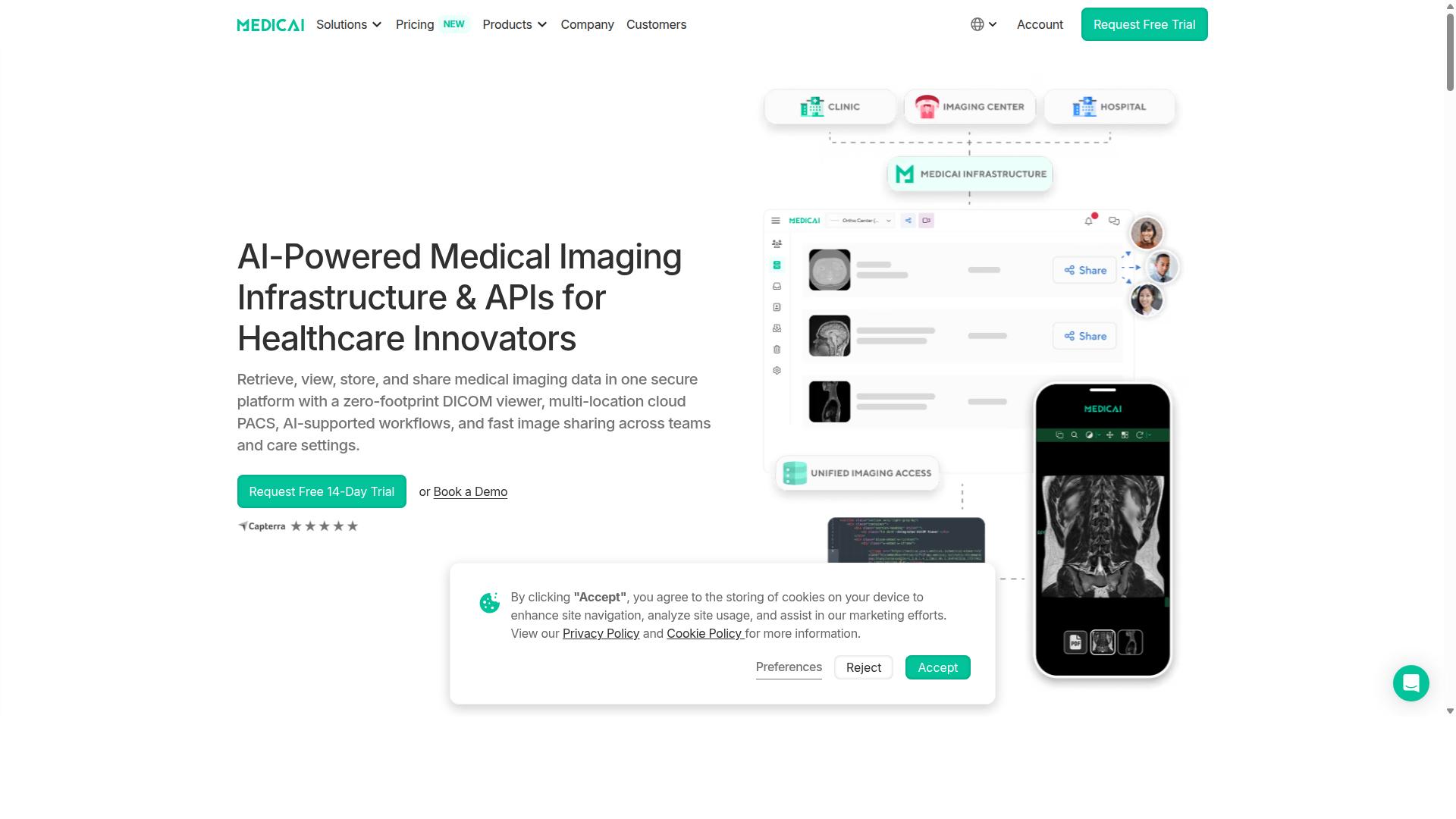
Medicai is a cloud-native medical imaging platform that consolidates upload, storage, viewing, and exchange in a single HIPAA-compliant workspace.
The platform serves as a secure uploader and DICOM gateway that enables healthcare teams to transfer medical studies from any location. This capability supports radiology workflow across different care settings.
Cloud PACS with VNA functions forms the storage backbone of the system. The platform allows multi-location access to imaging data while maintaining vendor-neutral archive capabilities for long-term data retention.
Zero-footprint viewer supports essential image manipulation tools including zoom, pan, windowing, and annotation. Radiologists can access these functions through any modern web browser without installing additional software.
The vendor-neutral archive component handles multi-vendor data retention. This architecture accommodates imaging data from various equipment manufacturers within a unified storage environment.
Global availability extends to healthcare providers worldwide. The platform currently stores over 1.7 million studies for medical facilities across multiple regions.
What Is TeleRay?
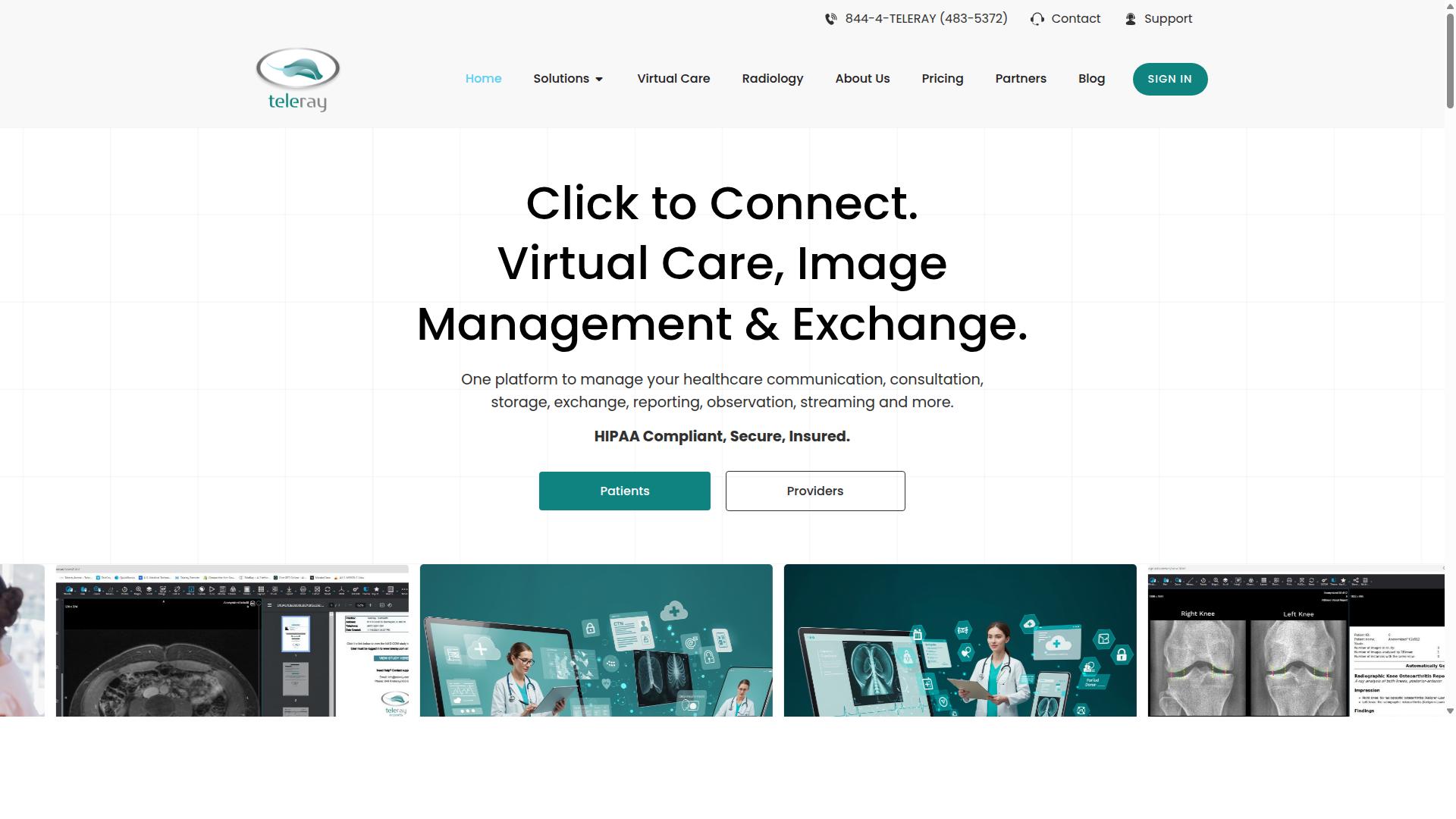
TeleRay is a teleradiology-focused platform that enables remote image viewing and sharing between radiologists and referring physicians. The system centers on remote reading capabilities and mobile image access for clinical workflows.
Users can exchange DICOM files across different locations and devices. Remote diagnosis becomes possible when radiologists need to review studies outside traditional hospital settings.
The platform supports radiology workflow by allowing image sharing between referring physicians and specialists. Mobile access features help professionals view images on various devices during consultations or on-call situations.
TeleRay addresses the need for flexible image review outside fixed workstation environments. Image sharing capabilities connect different healthcare providers through digital means rather than physical media transfer.
Features Compared
The following three subsections break down the mobile and cloud capabilities that matter most for radiologist workflows.
Zero-Footprint DICOM Viewer
Medicai's browser-based viewer runs on any modern device without software installs, delivering full diagnostic toolsets on iOS and Android tablets.
Users access precise controls such as zoom, pan, window-level presets, measurement calipers, annotation layers, and report generation buttons directly from the web interface.
Progressive image streaming combined with local GPU acceleration reduces latency compared to traditional desktop viewers.
TeleRay offers a similar viewer concept, yet details on progressive streaming and GPU acceleration remain less transparent in public materials.
Cloud PACS & Multi-Location Access
Medicai's Cloud PACS synchronizes studies across hospital networks and remote sites without on-premise servers.
Automatic replication to geographically distributed data centers and edge caching cut first-image display times while compression ratios reduce bandwidth by up to 70 percent.
Storage tiers include Starter at 500 GB and Standard at 2 TB, each supporting unlimited user accounts. Enterprise plans allow multiple connected locations.
TeleRay provides cloud access as well, yet published information on automatic replication, edge caching, and specific storage tiers remains limited.
AI-Supported Mobile Workflows
AI pre-processing in Medicai flags urgent findings before radiologists open studies on mobile devices.
The platform prioritizes worklists, auto-routes positive cases to on-call specialists, and supports report pre-population through 50M plus yearly API transactions that enable real-time AI integration.
TeleRay does not publish matching details on AI-driven prioritization or high-volume API transactions within its mobile workflow documentation.
Pricing Compared
Medicai publishes transparent monthly fees tied directly to storage volume and connected locations. The platform offers two main paid tiers with clear storage limits and location connections.
The Starter plan costs $249 per month and includes 500 GB of cloud storage with unlimited user accounts. This tier provides no connected locations, which suits smaller practices that handle fewer studies.
The Standard plan costs $749 per month and provides 2 TB of cloud storage along with unlimited user accounts. Organizations gain one connected location with this level of service.
Yearly billing reduces costs by 15 percent. The Starter plan drops to $209 monthly and the Standard plan drops to $639 monthly when paid annually.
Enterprise customers receive custom pricing based on their specific storage and location needs. Multiple connected locations and external connections become available at this level.
TeleRay pricing remains described generically without specific numbers available for direct comparison. Organizations should request current quotes to understand how their mobile access costs align with Medicai's published structure.
Both platforms require consideration of total cost of ownership. Storage needs, user counts, and location requirements affect the final monthly expense for mobile PACS access.
Who Should Choose Medicai
Hospitals, outpatient imaging centers, and multi-site specialty groups gain the most from Medicai's mobile-first architecture.
Orthopedic groups benefit when surgeons need instant fracture review on tablets during clinic or emergency calls. The platform supports DICOM viewer access across iOS and Android devices without requiring VPN connections.
Oncologists who present PET-CT studies during tumor boards find that secure image sharing works across multiple locations. Team members can view studies on smartphones or tablets while maintaining HIPAA compliance and encryption standards.
Teleradiology firms that scale remote reads appreciate the ability to add radiologists without infrastructure changes. The system processes over 1M studies annually, which demonstrates capacity for high-volume operations.
Multi-site specialty care providers across neurology, cardiology, and ophthalmology use the same mobile PACS environment. This approach eliminates separate viewer licenses while supporting annotation tools and measurement functions on any device.
Who Should Choose TeleRay
Smaller radiology practices that prioritize simple point-to-point image exchange may find TeleRay sufficient.
Organizations that need a straightforward solution for occasional image sharing often benefit from tools that keep the process direct. Practices with limited staff and minimal workflow complexity may appreciate this approach.
TeleRay presents a viable option for facilities that require basic mobile access without extensive system integration. Teams that handle smaller study volumes might prefer a platform that focuses primarily on core transfer functions.
Practices operating in a single location or within a tight regional network may see value in keeping their image exchange simple. The emphasis on point-to-point delivery can reduce layers of coordination for certain users.
Some groups prefer tools that avoid deep integration with existing hospital systems. In those cases, straightforward exchange methods can meet day-to-day needs without additional configuration.
Final Verdict
For teams that need reliable mobile access backed by enterprise-grade compliance, Medicai offers the clearer path forward.
Teams evaluating mobile PACS options see measurable differences in scale and regulatory readiness. Medicai stores over 1.7 million studies and has delivered more than 300,000 DICOM visualizations in recent months. This volume demonstrates consistent performance across radiology workflows.
Regulatory clearances matter for patient data protection. Medicai maintains explicit HIPAA, GDPR, and FDA clearances that address security requirements in multiple jurisdictions. These clearances reduce compliance risk for organizations handling sensitive imaging data.
TeleRay provides general teleradiology services, but lacks the same documented scale and multi-region regulatory profile. Organizations seeking proven infrastructure often prioritize solutions with measurable usage statistics and established compliance certifications.
Direct contact with regional offices supports evaluation. Teams in North America can reach the USA office at 7901 4th St N, STE 300, St. Petersburg, FL, 33702, or call +1 (832) 220 1035. European organizations can contact the Romania office at 53-55 N Filipescu, 5th Floor, Sector 2, Bucharest, 020961, or call +40 316 305 875. Email inquiries go to [email protected] for scheduling demonstrations.
Recommended Resources: